
June 25, 2020 6:23 am
The first step to successful labeling is to ensure that the equipment has been specifically matched to your application.
The container, including glass bottles, plastic bottles, vials, etc can vary greatly in-wall shapes, heights, widths. Looking at the scope of variance in your packaging will need to be evaluated by someone experienced in this area of packaging equipment.
The labelling process and basic principles involve:
There are many different types of labeling machines from entry-level to 50,000 bottles per hour and more. The scope of equipment available in the marketplace is overwhelming.
Usually, machines are available in Semi-Automatic and Fully Automated. Semi-Automatic Labelling machines are operated and each bottle is placed into the machine to be able to perform the labelling operation. The function of labelling can be by turn handle, button, or foot pedal.
Fully automated labeling machines usually sit on the end of the filling and capping operations and form part of the process which usually feeds the packaging through by conveyor to each area. Packaging can be fed into the machine by a depalletising machine and machine packed on exit or this operation can happen manually depending on the capability of the machinery.
The Australian-manufactured Benchmate is a great performer in this category. The manually operated label applicator is operated by turn handle.
One step up from the Benchmate is the Benchmark and also Australian Made. This versatile model can apply single, full wrap-around or front and back label.
The Benchmax is capable of dealing with the widest range of product sizes, has exceptional speed with high output for industrial use, usability and supports transparent, clear label application.
See the full process of filling, capping and labelling operations with the Polaris Line
Over the years I have seen many issues and assisted producers with correcting their equipment as the setup and tension of the labels is imperative.
Some common issues in labelling can occur because;
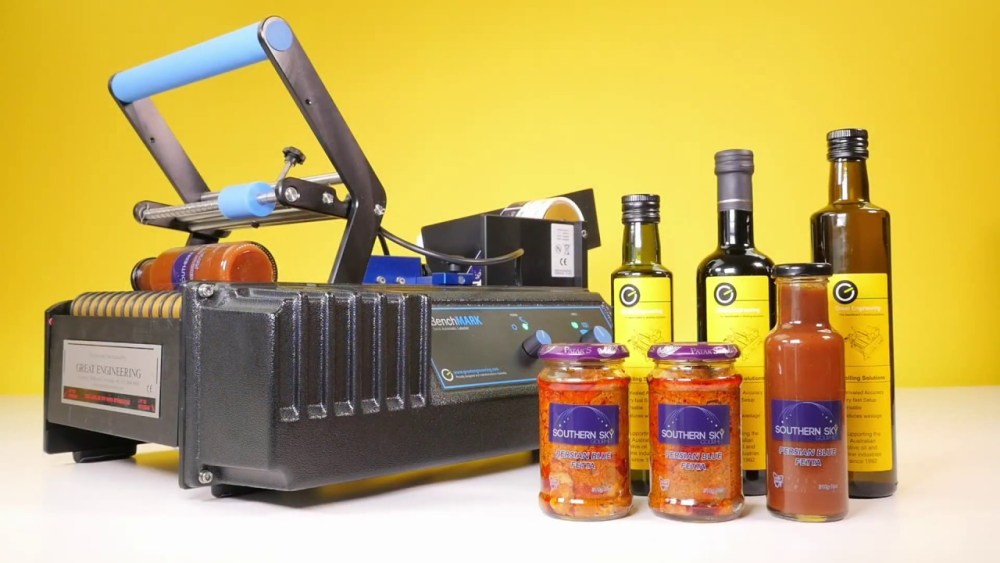
Speaking with a labeling expert can certainly assist in matching the correct equipment for your scope of packaging and budget.
Labeling is an important process that needs to be perfect every time to give your brand a perfect presentation and the quality of equipment is important.
Labeling is an expression of you brand awareness. After all, this is the point whereby the consumer sees your brand and all you have to offer.
If you need assistance with labeling equipment, please contact The Olive Centre on 07 4696 9845 or email sales@theolivecentre.com.au? Please have information on-hand with the different bottles or containers available, label sizes and shapes.
Made in Australia, Great Engineering labelers have a range of features that make them world-class. The labeling machines, used for applying pressure-sensitive labels, are more specifically, a new breed of machine providing “on-demand labelling”. Ideal for cylindrical containers for the food and beverage industry, pharmaceuticals, cosmetics, wines, essential oils, edible oils, beer, contract packaging, health foods, jams and preserves, the labellers provide product identification and presentation for all products in round containers where market presence is important.
With a worldwide reputation for reliability and capability, the machines are exported to 55 countries and are acclaimed for their innovative design and quality.
Polaris Automazioni has been working in the bottling industry since the 1960s, operating out of its manufacturing site at Reggio nell’Emilia, Italy. Over the years, it has specialised in the design and production of an automatic bottle-filling machine for special bottles, which is a major success in markets all around the world.
The company can offer a wide range of machines with a high content of cutting-edge technology and superior manufacturing efficiency protected by industrial patents, capable of meeting the most diverse market demands.
Today, the people working at Polaris have the commercial and technical expertise needed to safeguard the continuity of the technical legacy left by its founder, giving new impulse for even more technical and commercial expansion, demanding a combination of know-how and vision, matched by a focus on innovations in technology.
More about
Posted by amandabailey
Categories: All articles, Labelling, Packaging
Tags: Food Labelling, honey labelling, labeling, Labelling, labelling olive oil bottles, olive oil labeling, olive oil labelling
Mobile Site | Full Site
Get a free blog at WordPress.com Theme: WordPress Mobile Edition by Alex King.