In Spain and other Mediterranean countries, the olive tree reigns supreme, producing not only world-renowned olive oil but also significant quantities of semi-solid olive mill waste are generated. The mill waste is often referred to as alperujo in Spanish.
As a circular economy fertilisation and soil protection strategy, the direct application of alperujo to agricultural soils presents an opportunity to manage nutrient input and manage waste generation efficiently. 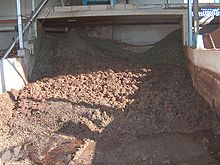
However, this practice of grove application of direct soil application with alperujo is not without its challenges. Alperujo, can be rich in polyphenol substances which may inhibit microbial growth and be phytotoxic when applied in large quantities, posing potential risks to soil quality and ongoing plant production. To address this dilemma, an 18-month field experiment was conducted in the Spanish region of Valencia, focusing on the application of moderate quantities of alperujo to permanent cropping olive groves. The spanish study aimed to investigate whether this practice could be harmonised with soil quality protection and the preservation of crop productivity.
The study posed the question, “Is the Direct Soil Application of Two-Phase Olive Mill Waste (Alperujo) Compatible with Soil Quality Protection?”
The Spanish alperjo study, involved eleven experimental parcels managed by local farmers and explored two scenarios:
- a single application of 10 tons per hectare and;
- a second application of the same quantity after ten months.
Soil chemical parameters were meticulously examined at various intervals, including 0, 6, 10, and 18 months. These parameters included soil organic carbon, total Kjeldahl nitrogen (TKN), pH, electrical conductivity, nitrates, and polyphenol contents.
The findings of this research indicate that while the application of alperujo had some short-term impacts on soil chemical properties, these effects were highly transient, typically dissipating within 4-6 months of application, regardless of the scenario. In particular, changes in pH, electrical conductivity, nitrate contents, TKN, and polyphenol contents were primarily detectable at the time of application, with no lasting effects observed in subsequent samplings.
Researchers commented “In our study, despite the low application rate of alperujo (10 t/ha), the quantity of TKN in the amended soils initially increased with respect to the controls, but by 18 months the soil TKN levels were indistinguishable from the controls. What can be deduced from our data is that there is a wide margin to increase the application rate of the alperujo based on the criterion of nitrogen demand.”
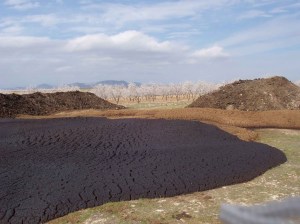
Soil organic carbon concentrations generally increased in the study parcels, indicating that the practice could enhance the fertility of soils with low organic matter content. This is particularly promising, as many parcels included in the study had organic carbon contents below 1%.
Qualitative assessments conducted with the participation of local farmers revealed minimal adverse effects on soil quality or crop productivity. Instead, some positive outcomes were noted, including reductions in erosive processes and improvements in plant vigor. These observations align with the parameters, suggesting that the direct application of alperujo at low rates did not lead to lasting detrimental effects on soil quality or the productivity of permanent crops in the Mediterranean region of Valencia, Spain.
The study offers valuable insights into the compatibility of the direct application of alperujo with soil quality protection and agricultural practices in Mediterranean regions. It demonstrates that when managed well, alperujo can be a beneficial resource for enhancing soil fertility and crop productivity without compromising environmental integrity. The findings further underscore the potential of alperujo as a circular economy fertilisation strategy that not only conserves resources but also reduces the costs associated with waste transport and disposal.
A few studies have comprehensively explored the direct application of olive mill waste pomace, and the longitudinal monitoring of soil chemical properties which are presented here provides valuable data for future research and decision-making in olive grove management. With an application rate of 10 tons per hectare, the effects on soil parameters were observed, emphasising the potential safety of this practice. The increase in soil organic carbon concentrations is particularly encouraging, as it suggests a means of improving the fertility of nutrient-poor soils.
For small-scale olive oil producers and local agricultural communities, the direct application of alperujo can be an economically and environmentally viable approach for managing the abundant waste generated by the olive oil industry. Together with pomace treatment and composting, direct alperujo application at the recommended dose of 10 tons per hectare annually can promote a circular economy in the olive oil sector of the Community of Valencia and other regions. This environmentally friendly approach allows for the local utilisation of alperujo, reducing the costs and ecological footprint associated with waste disposal and transport.
In this study, the direct application of alperujo should be considered a sustainable and agro-environmentally sound management option for the olive oil sector, contributing to soil quality preservation. Each producer is posed with questions about waste management taking into account on how to manage best practice and ensure responsible and effective application of alperujo in a manner that maximises its benefits while minimising potential risks.
Is the Direct Soil Application of Two-Phase Olive Mill Waste (Alperujo) Compatible with Soil Quality Protection?
by Ana García-Randez 1,Evan A. N. Marks 2,*,María Dolores Pérez-Murcia, María Dolores Pérez-Murcia, 1,Luciano Orden 1,3,Javier Andreu-Rodriguez 1,Encarnación Martínez Sabater 1,María Teresa Cháfer 4 andRaúl Moral 1
- 1 Centro de Investigación e Innovación Agroalimentaria y Agroambiental (CIAGRO-UMH), Universidad Miguel Hernández, Carretera de Beniel Km 3,2, 03312 Orihuela, Spain
- 2 Soil Science and Environmental Technologies Group, Department of Agrochemistry and Environment, Universidad Miguel Hernández, Avda. de la Universidad s/n., 03202 Elche, Spain
- 3 Estación Experimental Agropecuaria INTA Ascasubi (EEA INTA Ascasubi), Ruta 3 Km 794, Hilario Ascasubi 8142, Buenos Aires, Argentina
- 4 Instituto de Ingeniería de Alimentos para el Desarrollo, Departamento de Tecnología de Alimentos, Universitat Politècnica de València, 46022 Valencia, Spain
- Read full article at: https://www.mdpi.com/2073-4395/13/10/2585
- Photo credit: “olive tree” by Romtomtom is licensed under CC BY 2.0.
- Alperujo = Olive Mill Waste or Pomace
More on Olive Waste Machinery
Other articles about Olive Waste:
 Amanda Bailey on Olives by The Olive Centre